
Ray Species
Explore UK ray species, including identification, shore-caught records, average sizes and the latest fishing regulations.Rays are recognised by their flattened, disc-shaped bodies, broad pectoral fins and long tails, with both eyes positioned on the upper side of the head. Unlike flatfish, rays have skeletons made of cartilage rather than bone and are closely related to sharks.
This guide covers the most commonly encountered ray species found around the UK coastline, including thornback, spotted, blonde and undulate rays. These species inhabit sandy, muddy and mixed seabeds, with several regularly caught by shore anglers.
Some rarer ray and skate species are found in deeper offshore waters and are less frequently encountered when fishing from the shore.
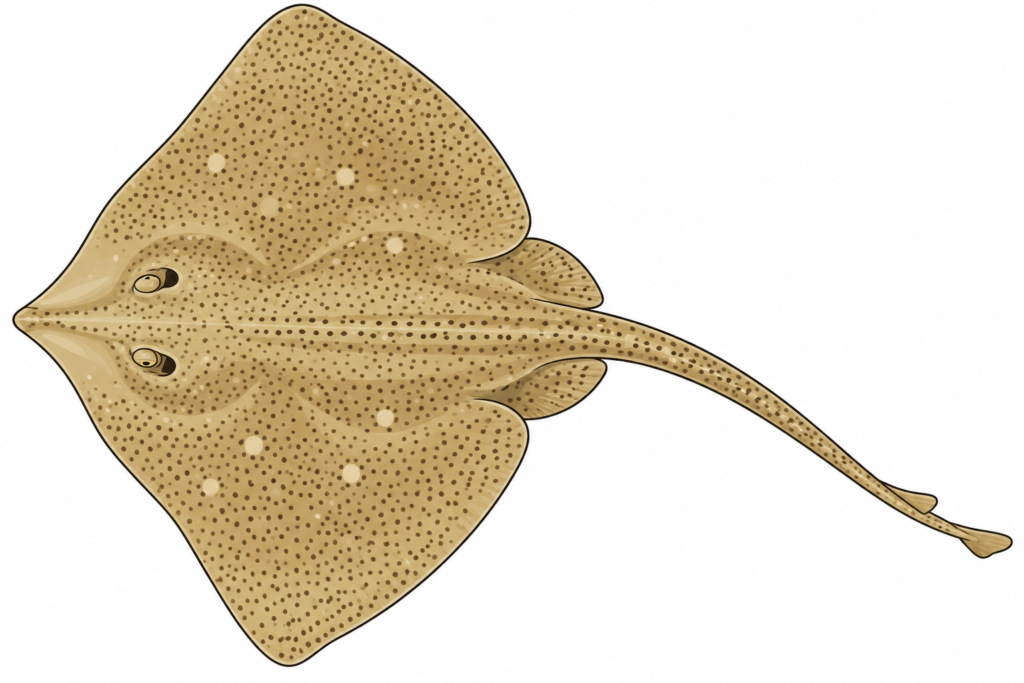
Blonde Ray
(Raja brachyura)
Average weight: 5–15 lb, with larger specimens of 20–30 lb or more occasionally caught.
Also known as: Blonde Skate, Blonde, Blonde Ray Skate.
Peak seasons typically caught: April to October, with May to September generally offering the best shore fishing opportunities, particularly along sandy beaches, shingle banks and mixed-ground marks around the southern and western coasts of the UK.
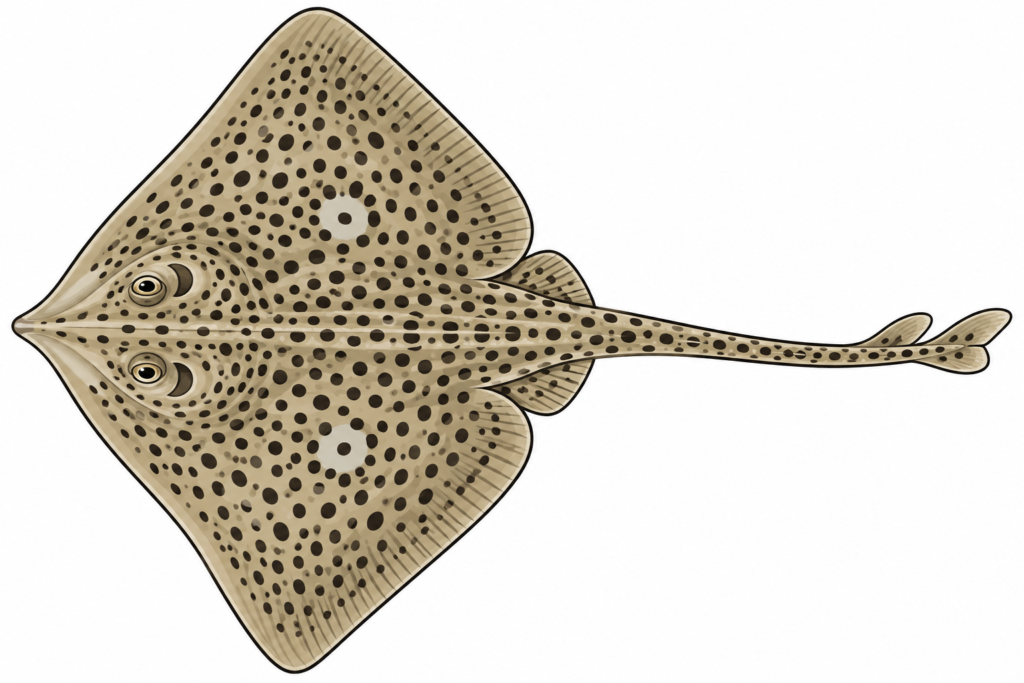
Spotted Ray
(Raja montagui)
Average weight: 2–5 lb, with larger specimens of 6–8 lb occasionally caught.
Also known as: Spotted Skate, Homelyn Ray, Homelyn Skate.
Peak seasons typically caught: April to October, with May to September generally offering the best shore fishing opportunities, particularly along sandy beaches, shingle banks and mixed-ground marks around the southern and western coasts of the UK.
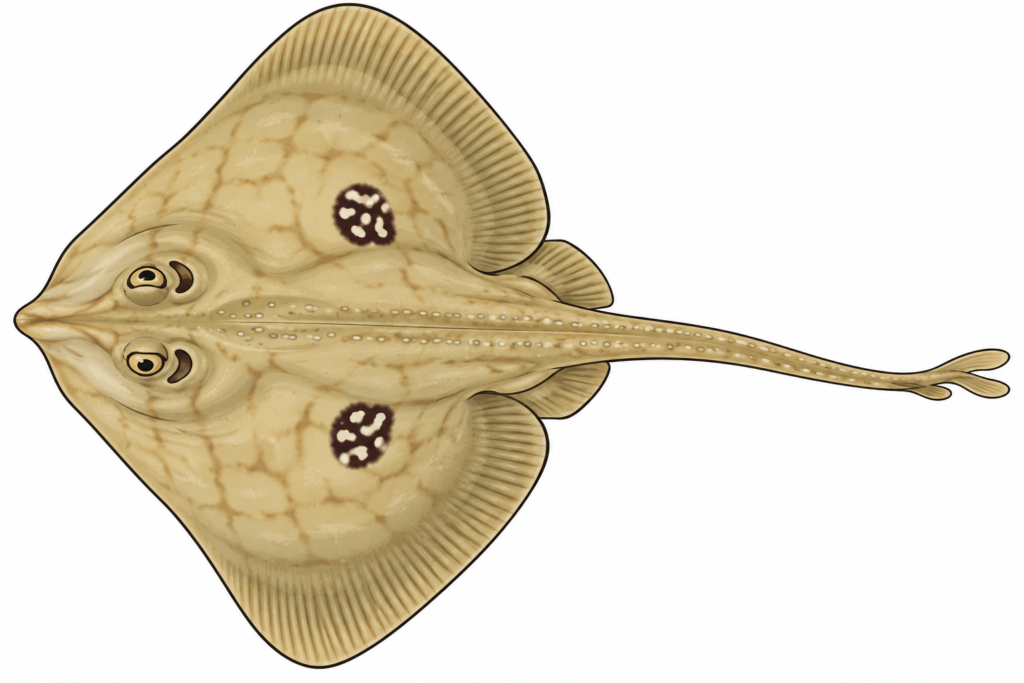
Cuckoo Ray
(Leucoraja naevus)
Average weight: 1–3 lb, with larger specimens of 4–5 lb occasionally caught.
Also known as: Cuckoo Skate, Butterfly Ray, Cuckoo Skate Ray.
Peak seasons typically caught: April to October, with May to September generally offering the best opportunities, particularly along the western coasts of Scotland, Wales and southwest England. Cuckoo rays generally favour deeper offshore waters and are rarely caught from the shore.
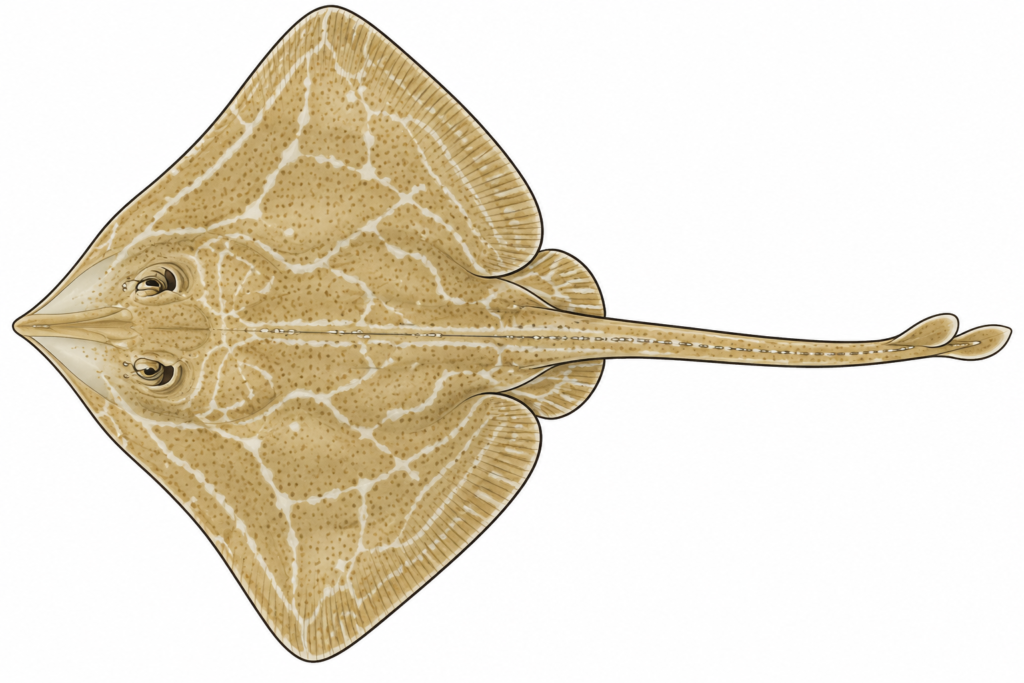
Small-Eyed Ray
(Raja montagui)
Average weight: 2–5 lb, with larger specimens of 6–8 lb occasionally caught.
Also known as: Spotted Skate, Homelyn Ray, Homelyn Skate.
Peak seasons typically caught: April to October, with May to September generally offering the best shore fishing opportunities, particularly along sandy beaches, shingle banks and mixed-ground marks around the southern and western coasts of the UK.
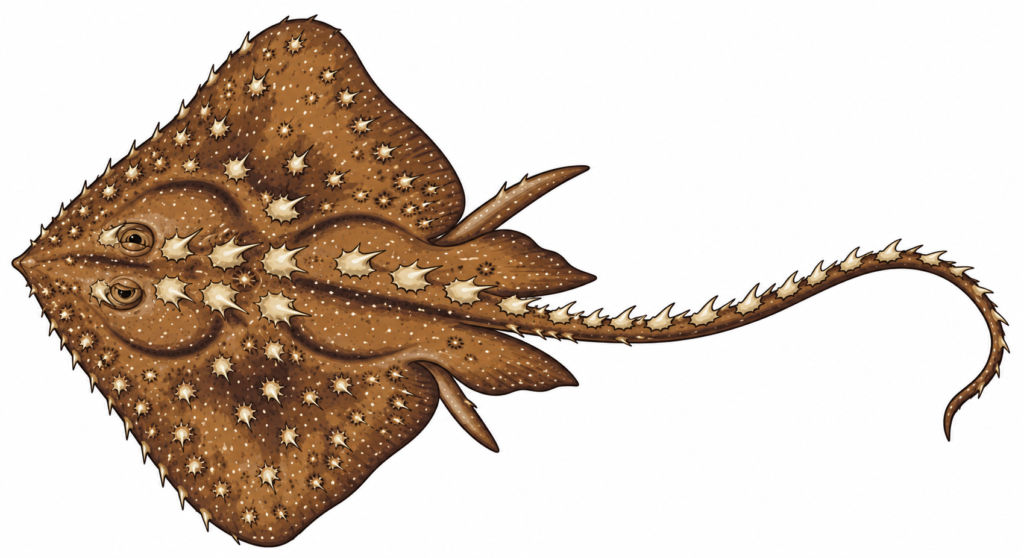
Thorny skate
(Amblyraja radiata)
Average weight: No reliable UK shore-caught average is available, as captures are extremely rare. Specimens typically weigh around 2–6 lb, with larger individuals occasionally exceeding 10 lb.
Also known as: Starry Ray, Starry Skate, Thorny Ray, Starry Thornback.
Peak seasons typically caught: No established UK shore fishing season. Thorny skate favour colder, deeper waters and are occasionally encountered around northern Scotland and the Shetland Islands, primarily by boat anglers.
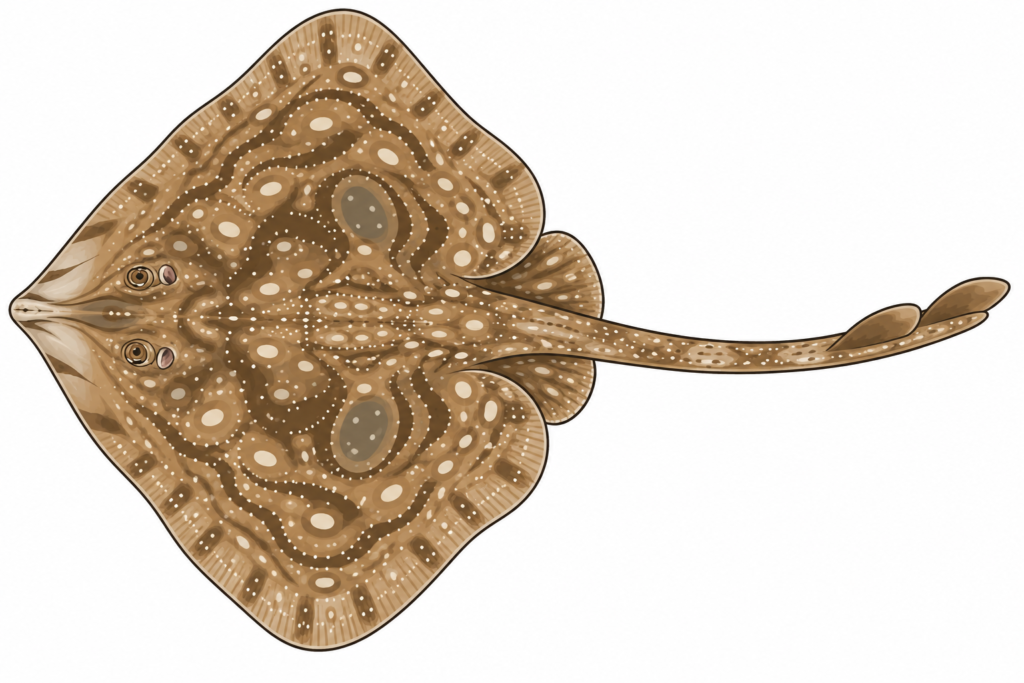
Undulate ray
(Raja undulata)
Average weight: 5–12 lb, with larger specimens of 15–20 lb or more occasionally caught.
Also known as: Undulate Skate, Painted Ray, Wavy Ray.
Peak seasons typically caught: April to October, with May to September generally offering the best shore fishing opportunities, particularly along sandy beaches, shingle banks and mixed-ground marks around the southern coast of England, especially Dorset and Hampshire.