


Once considered an unusual catch by many Humber shore anglers, haddock have become increasingly familiar over the last three years. So what’s changed, why are they appearing alongside — and sometimes outnumbering — cod, and what is the best way to catch them?
The Changing Face of Winter Fishing on the Humber
For generations, winter sea fishing on the River Humber has largely revolved around cod, codling and whiting.
Ask most experienced Humber anglers what they’re hoping to catch during a cold winter session and cod will probably be somewhere near the top of the list.
But over the last three years, something interesting has been happening.
Haddock are turning up regularly in catches, and on some sessions they’re even outnumbering the cod.
For anglers who remember when a haddock was an unusual fish to see on the Humber, it’s a noticeable change.
So why is it happening?
Have haddock suddenly moved into the Humber? Are there more fish in the North Sea? Is climate change influencing their distribution? Or are we simply seeing the results of changing fish populations?
The answer is probably a combination of factors, and the scientific evidence provides some interesting clues.
Why Are There More Haddock in the Humber?
1. North Sea Haddock Stocks Have Increased
This is perhaps the strongest scientific explanation for the increase in haddock being reported by Humber anglers.
According to the International Council for the Exploration of the Sea (ICES), North Sea haddock spawning-stock biomass increased sharply after 2019.
Several strong year classes between 2019 and 2022 helped increase the population.
A year class is simply the group of fish born in a particular year. When a large number of young fish survive, those fish can become increasingly noticeable in catches as they grow.
That timing is particularly interesting.
The improvement in North Sea haddock stocks began several years before anglers started noticing more haddock in the Humber around 2023.
As those fish grew and spread through their feeding grounds, there were potentially more haddock available to be caught.
It’s important to understand that a North Sea-wide increase doesn’t automatically prove that haddock numbers have risen in every part of the Humber.
But it does provide a credible explanation for why anglers may now be encountering them more frequently.
2. Cod Stocks Have Been Struggling
There’s another side to this story.
While North Sea haddock stocks experienced a substantial recovery, cod in the southern North Sea have been under pressure.
Scientific assessments have highlighted poor recruitment and low spawning-stock biomass in the southern cod population.
In simple terms, fewer young cod have been surviving to replenish the stock.
This could help explain why haddock are becoming more prominent in catches.
It’s not necessarily that haddock are replacing cod or pushing them out.
There may simply be more haddock available relative to cod than anglers were accustomed to in previous years.
And when you’re fishing the same marks, with the same bait and similar rigs, that difference can become very noticeable.
The important distinction is that more haddock in anglers’ catches doesn’t automatically mean haddock have displaced cod.
3. Are Haddock Moving Further South?
Haddock have traditionally been associated with the northern and central North Sea, although their distribution extends further south.
Their movements are influenced by several factors, including water temperature, food availability, suitable seabed habitat and population size.
When a fish population increases, its distribution can also change as fish occupy suitable feeding grounds.
It’s possible that greater haddock abundance has increased the number of fish reaching areas around the Humber.
However, we should be cautious about claiming that climate change alone is pushing haddock into the estuary.
Changes in sea temperature can influence fish distribution, but the relationship is complicated.
Without local survey data, we cannot say exactly how much of the recent Humber increase is caused by temperature, stock recovery or changes in feeding patterns.
4. The Humber Offers Feeding Opportunities
Haddock are primarily bottom-feeding fish.
They search the seabed for marine worms, molluscs, small crustaceans, brittle stars and other invertebrates.
The Humber and its approaches contain extensive areas of mud, sand, mixed sediment and deeper channels.
These environments can provide suitable feeding opportunities, particularly towards the more saline, marine-influenced reaches of the estuary.
Haddock are generally more associated with fully marine conditions than species such as flounders.
For that reason, the lower Humber and approaches to the North Sea are logical places to look for them.
The exact marks where they concentrate will depend on local conditions, tides and the availability of food.
Why Are Haddock Sometimes Outnumbering Cod?
This is perhaps the most interesting question for Humber anglers.
For years, cod have been the main winter target, with haddock regarded as an occasional bonus.
Now some anglers are reporting the opposite.
There are three possible explanations.
Firstly, the increase in the wider North Sea haddock population may mean more haddock are available in local waters.
Secondly, weaker southern North Sea cod stocks may mean anglers encounter fewer cod.
Thirdly, haddock and cod can both take worm and shellfish baits presented on the seabed.
So anglers targeting cod may already be using tackle and bait perfectly capable of catching haddock.
The result is that haddock become a regular part of the catch without anglers necessarily changing their fishing methods.
But remember, individual catch reports are not the same as a scientific population survey.
To establish whether haddock are genuinely replacing cod in the Humber, we’d need consistent records showing catches, fishing effort, locations and seasons over several years.
What Is the Best Bait for Haddock on the Humber?
Now for the practical side.
Haddock feed mainly on or close to the seabed, searching for worms, shellfish and other small animals.
That makes several familiar Humber sea fishing baits suitable for targeting them.
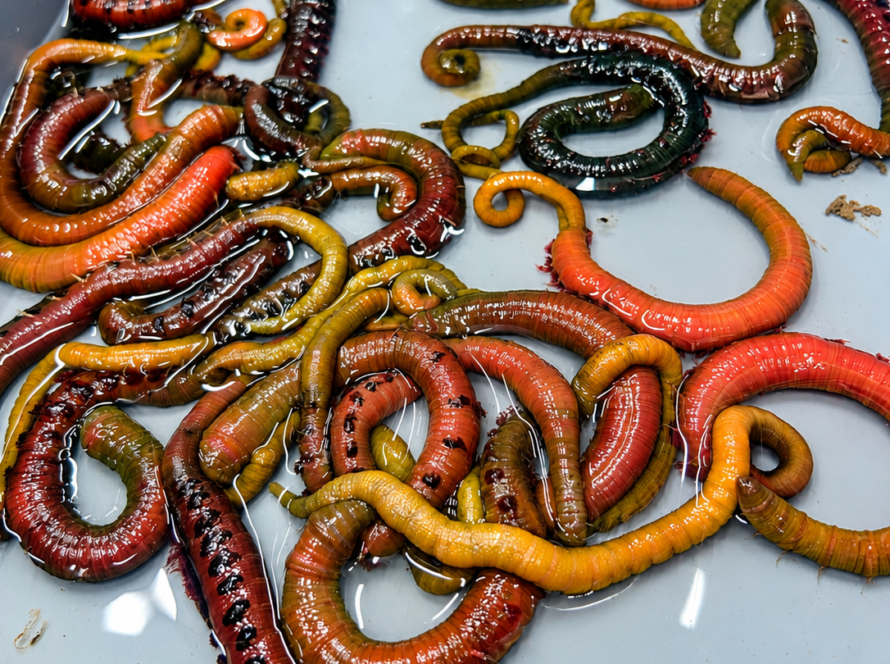
1. Lugworm
My first bait to try for Humber haddock would be lugworm.
Both blow lugworm and black lugworm are sensible choices.
Haddock naturally feed on marine worms, so lugworm provides a realistic food source.
Rather than automatically using the enormous bait presentations sometimes associated with targeting big cod, try a more compact worm bait.
A couple of good worms presented neatly on a suitable hook can be an effective starting point.
2. Mussel
Mussel is a traditional haddock bait and deserves more attention from Humber anglers.
Haddock naturally feed on molluscs, making mussel an obvious option.
Its soft texture and scent can make it attractive, but it needs careful presentation.
Use bait elastic to secure the mussel to the hook, especially when fishing in strong Humber tides.
Mussel can also be combined with lugworm.
3. Ragworm
Ragworm is another excellent bait to experiment with.
A small bunch of ragworm provides a natural worm presentation, with movement that may help attract feeding fish.
It also allows you to target haddock while remaining in with a chance of other Humber species.
4. Squid
Squid is a familiar bait for Humber cod and whiting anglers.
For haddock, try using a narrow strip rather than automatically presenting a large squid bait.
Squid is tough, stays on the hook well and can be useful in strong tidal currents.
It also works as a tipping bait alongside lugworm.
5. Lugworm and Squid Cocktail
This is probably the bait combination I’d experiment with first if specifically targeting haddock while still hoping for codling or whiting.
A neat lugworm bait tipped with a small strip of squid offers a mixture of natural scent and a durable presentation.
It isn’t a guaranteed haddock bait, but it’s a practical option for mixed-species fishing on the Humber.
Best Baits for Humber Haddock at a Glance
| Bait | Why Try It? |
|---|---|
| Lugworm | Natural seabed food, good all-round choice |
| Mussel | Traditional shellfish bait for haddock |
| Ragworm | Natural scent and movement |
| Squid strip | Tough bait, useful in strong tides |
| Lugworm and squid | Good mixed-species presentation |
| Razorfish | Shellfish alternative worth testing |
My recommendation: Start with lugworm on one hook and mussel or lugworm tipped with squid on the other. This gives you a useful comparison during the same session.
What Rigs Work Best for Haddock on the Humber?
One mistake anglers might make is assuming they need large hooks and enormous baits because they’re fishing the Humber in winter.
That may be appropriate when specifically targeting a large cod, but haddock often respond well to smaller, more carefully presented baits.
Two-Hook Flapper Rig
A two-hook flapper rig is a sensible starting point when targeting haddock over clean ground.
It allows you to experiment with different baits and present them close to the seabed.
Try size 1 or 1/0 hooks as a starting point, adjusting for bait size and the fish being caught.
Keep the hooklengths manageable in strong currents to reduce tangles.
Pulley Pennel Rig
If you’re fishing a mark where cod are still a realistic possibility, a pulley pennel rig remains useful.
However, large hooks and bulky baits may not be the best approach when specifically targeting smaller haddock.
A more modest bait presentation on an appropriately sized single hook or smaller pennel arrangement may improve your chances.
Pulley Dropper Rig
For Humber anglers who favour a pulley dropper, there’s no reason it cannot catch haddock.
The important factors are keeping the bait near the seabed, choosing a suitable hook size and making sure the rig fishes effectively in the tide.
Do You Need to Cast Long Distances?
Not necessarily.
Haddock are bottom-feeding fish, so finding suitable seabed and feeding areas matters more than simply casting as far as possible.
On the Humber, deep channels, channel edges and areas of mixed sediment are worth investigating.
Sometimes a long cast will reach the better ground.
On other occasions, fish may be feeding much closer to the bank.
Rather than repeatedly casting to the same distance, experiment with different ranges where it is safe and practical.
Finding the fish is more important than winning a casting competition.
Where Should You Look for Haddock on the Humber?
The lower Humber and the approaches towards the North Sea are sensible places to concentrate your efforts.
Areas around Immingham, Grimsby, Cleethorpes and the outer estuary offer different depths, seabed types and tidal conditions.
Marks around East Halton and other accessible sections of the south bank may also be worth investigating when local catch reports suggest haddock are present.
However, not every mark will produce haddock consistently.
The Humber is a large and complicated estuary, and the presence of fish can change with the tide, season and river conditions.
Pay attention to where haddock are actually being caught rather than assuming they’ll be present everywhere.
Always check access restrictions, particularly around commercial docks, industrial sites and shipping facilities.
What Tide Is Best for Humber Haddock?
There isn’t enough reliable Humber-specific evidence to claim that one particular tide is always best for haddock.
However, there are some useful starting points.
The flooding tide can change water depth and bring fish into accessible feeding areas.
Periods of manageable current may allow a bait to fish more naturally and make subtle bites easier to detect.
Strong spring tides can be challenging on the Humber, especially where the current makes holding bottom difficult.
A neap tide or a period around high-water slack may therefore be worth trying at certain marks.
But this will vary depending on the location.
A mark that fishes well over high water may behave very differently from one that produces during the ebb.
Keep records of when haddock are caught and look for patterns.
Are Haddock Easier to Catch Than Cod?
Not necessarily, but they can require a slightly different approach.
Haddock generally have smaller mouths than large cod and can respond well to smaller baits.
Their bites can also be less dramatic than the powerful pulls anglers sometimes associate with cod.
Look for repeated taps, rattles or smaller movements on the rod tip.
Avoid striking wildly at every indication.
Allow the fish an opportunity to take the bait, then retrieve steadily when you’re confident a fish is hooked.
Haddock have relatively soft mouths, so unnecessarily aggressive striking or retrieval can increase the chance of losing a fish.
How to Identify a Haddock
Haddock are easily confused with other members of the cod family, particularly by inexperienced anglers.
Fortunately, they have some distinctive features.
Look for:
A dark, almost black lateral line running along the side of the body.
A distinctive dark mark above the pectoral fin, often called the devil’s thumbprint.
A relatively small chin barbel.
A generally slimmer appearance and smaller mouth than a comparable cod.
Cod usually have a much paler lateral line and lack the distinctive dark shoulder mark associated with haddock.
Once you’ve seen a few, the difference becomes quite obvious.
Could Haddock Become a Permanent Feature of Humber Winter Fishing?
It’s certainly possible that haddock will continue to feature regularly in catches.
But fish populations are never static.
Haddock stocks fluctuate as strong and weak year classes enter the population.
Future catches will depend on recruitment, fishing pressure, environmental conditions and the distribution of fish in the North Sea.
The recent increase doesn’t guarantee that haddock will remain equally abundant around the Humber indefinitely.
Equally, there’s no reason to assume they’re merely a one-season curiosity.
The most useful thing Humber anglers can do is keep recording their catches.
Not just the number of haddock, but their sizes, the marks where they’re caught, the baits used and the state of the tide.
Those observations could help build a clearer picture of how the Humber’s winter fishery is changing.
Final Thoughts: Are Haddock Becoming the New Humber Cod?
For many years, cod have been the fish most closely associated with winter sea fishing on the Humber.
But over the last three years, haddock have increasingly entered the conversation.
The improvement in North Sea haddock stocks, combined with the difficulties facing southern North Sea cod, provides a compelling possible explanation.
And for shore anglers, it presents an opportunity.
You don’t necessarily need completely different tackle or an entirely new approach.
A suitable bottom-fishing rig, smaller hooks, well-presented lugworm, mussel or squid, and an understanding of the tide may be enough to give you a realistic chance when haddock are present.
Perhaps the biggest change needed is in our expectations.
Instead of regarding every haddock as an accidental catch while fishing for cod, it might be time to start thinking about deliberately targeting them.
Are haddock becoming the new winter favourite on the River Humber?
Only time will tell.
But one thing is certain: if anglers continue catching them in the numbers being reported, they’re going to become an increasingly important part of the Humber fishing conversation.
Have You Noticed More Haddock on the Humber?
Have you caught more haddock than cod over the last few winters?
Which marks have produced for you, and what baits have worked best?
I’d particularly like to hear whether anglers are finding haddock on lugworm, squid, mussel or other baits.
Leave a comment and share your experiences.
The more information Humber anglers share, the better we can understand this interesting change in our local fishing.